
Tuckpointing & Repointing · Chicagoland, IL
What 'Repointing' Actually Means — And How to Tell If It Was Done Right
Repointing is one of the most misused terms in masonry contracting — done correctly it's a 20–30 year repair, done as a shortcut it fails within a few years. Understanding what the process should look like gives property owners the tools to evaluate contractor quality before they sign anything.
2026-05-11
Why the Term Is Confusing
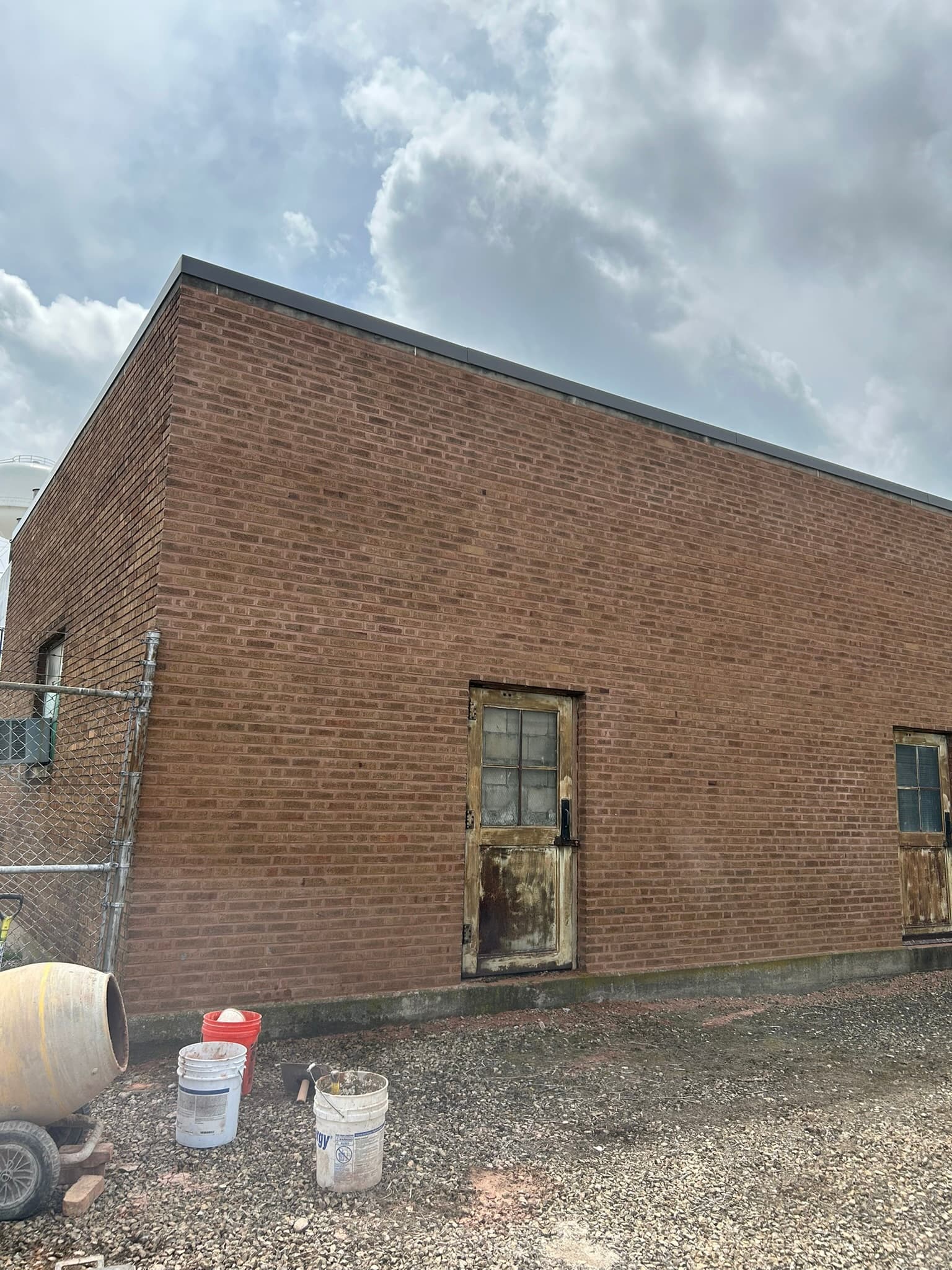
"Tuckpointing," "repointing," and "pointing" are used interchangeably in the Chicago market, but they refer to the same fundamental work: removing deteriorated mortar from brick joints and replacing it with fresh mortar. The terms have different technical origins — tuckpointing historically described a specific two-color decorative technique — but in Chicagoland contracting, they all mean joint repair.
What they don't mean is applying new mortar over old mortar without removing anything first. That process — which looks like repointing, takes less time, and costs less to do — is a surface patch that typically fails within 3–7 years. It's the most common quality problem in residential masonry contracting and the reason many property owners have been "tuckpointed" multiple times at short intervals with no lasting result.
What Correct Repointing Looks Like
The standard is defined by the brick industry and by any masonry contractor who does the work properly:
Mortar Removal Depth
Old mortar must be removed to a minimum depth of 3/4 inch, and preferably 1 inch on older buildings. Anything shallower doesn't give the new mortar enough mechanical contact to bond properly and doesn't remove the portion of the old joint that has absorbed water and cycled through freeze events repeatedly.
The removal method matters: mechanical tools — angle grinders with diamond blades, oscillating multi-tools, or dedicated tuck-pointing grinders — are correct. Hammer and cold chisel alone risks brick damage on older buildings and produces irregular joint geometry that limits bond surface. On historic buildings with soft original brick, hand tools are sometimes used for finishing stages, but mechanical removal of the bulk of the old mortar is the standard.
Joint Preparation
After mechanical removal, the joint needs to be clean — no dust, no loose material, no mortar that's bonded in spots but hollow behind. Blowing out or brushing the joint before packing isn't optional; it's what determines whether the new mortar bonds to the remaining masonry or sits loosely inside the opening.
Mortar Composition
This is where many otherwise competent contractors make the wrong call. The mortar used for repointing should match the original mortar in compressive strength — not just in color. Using type S (high-strength Portland) mortar on pre-1960 brick is a well-documented mistake. That mortar is harder than the brick; when the wall moves with temperature cycles, stress concentrates in the brick face rather than the joint. The joint is supposed to be the sacrificial element — when it's harder than the brick, the brick fails instead.
The correct specification for older brick uses a Type N or Type O mortar, or a custom lime-Portland blend matched to the original. For newer construction (post-1980) with denser brick, Type S is typically appropriate. Matching mortar to the building rather than to a standard bag specification is the mark of a contractor who understands how masonry actually works.
Joint Packing
New mortar should be packed in lifts — multiple passes — especially on deep joints. Packing the full 3/4"–1" depth in a single pass traps air pockets and produces a joint that's mechanically weak at its center. The first layer is packed and allowed to firm up slightly before the second layer goes in. For wide joints on historic construction, three passes may be appropriate.
Joint Finishing (Tooling)
After the mortar is firm but not hard, the joint surface is tooled — pressed and shaped with a specialized tool — to match the original joint profile. Common profiles in Chicagoland: rodded (slightly concave, the most common in residential), weathered (angled to shed water), flush, or grapevine. Tooling compacts the surface layer and significantly improves density and water resistance.
Unfinished joints that were left flat and uncompressed indicate the contractor either rushed through the finishing stage or doesn't understand why it matters.
How to Tell If Your Building Was Done Right
If you have documentation that your building was repointed in the last 10 years and you're already seeing mortar problems, here's how to assess whether the original work was done correctly:
Look at the joint depth. Where mortar is visibly cracking or failing, see if there's a thin failed layer sitting on top of an older, darker mortar underneath. If that's what you see, the joint was buttered over — new mortar was applied on top of old without cutting. That work will always fail early, and it failed as expected.
Probe the joints that look good. Fresh-appearing mortar that can be scratched out with a key or utility knife within a few years of installation indicates either incorrect mortar composition (too soft) or insufficient packing (too shallow). Properly packed, appropriately specified mortar can't be scratched with hand tools once cured.
Check the transitions. Where a repointed section meets an unrepointed section, the depth difference should be visible. If there's no visible step at the edge of the work area — if the new mortar appears flush with old mortar at the boundary — the new mortar was applied as a surface layer rather than as a properly cut replacement joint.
Look at the brick edges. Mechanical joint cutting on a well-maintained building shouldn't leave systematic nicks or chips in the brick faces. Some minor marks are expected on rough brick; a pattern of chipping along joint lines suggests imprecise grinding technique.
What Good Contractors Will Tell You Upfront
Before signing anything, ask these questions. The answers are telling:
"How deep will you cut the joints?" Correct answer: 3/4 to 1 inch. "We'll grind it out" with no depth specified is ambiguous. "We'll clean it up and pack it" without mentioning cutting at all is a surface patch.
"What mortar specification will you use?" A contractor who knows their craft will tell you the mortar type and roughly the mix they're planning, and they'll connect it to the age and type of brick on your building. A contractor who says "standard mortar" or doesn't know what a mortar type designation means should raise a flag.
"Will you match the existing joint profile?" Tooling the joint to match the original profile is the finishing step — it's what makes the repair look right and perform right. If the contractor says they'll leave joints flush or doesn't mention tooling, the job won't be finished correctly.
FAQ
My contractor quoted significantly less than two other bids. Should I be suspicious?
The low bid in masonry work is often the contractor who isn't cutting the joints. Joint cutting is the most labor-intensive part of the work — it's slow, generates significant dust, and requires appropriate equipment. A contractor who skips it can move significantly faster and charge less. The economics make sense from their side; the result fails predictably from yours.
Is there any way to repair buttered-over joints without fully recutting them?
No. The surface patch has to come out — it's bonded (weakly) to the brick face, not to the underlying joint. When buttered-over mortar fails, it sometimes peels off the brick face in sheets, occasionally taking brick surface texture with it. The correct repair is full mechanical joint cutting and proper repointing, same as if it had never been done.
What warranty should I expect on correctly done repointing?
A contractor confident in their work and materials should warranty joint repairs for at least 5 years against defects. Some contractors extend longer warranties for commercial projects. Be cautious about warranties from contractors who can't explain their mortar specification — the warranty is only meaningful if the underlying work was done correctly.
Working with Emerald Masonry
We explain our process on every estimate — joint cutting method, mortar specification, and tooling profile. If you've had tuckpointing done before that didn't last, we'll assess whether it was done correctly and give you an honest recommendation on what needs to happen next. No pressure to commit to work you don't need.
Phone: (708) 288-1696 | emeraldmasonryil@gmail.com | Free on-site estimates throughout Chicagoland.