
CMU Block Repair · Crest Hill, IL
CMU Block Repair in Crest Hill, IL — Commercial and Industrial Masonry for Will County Properties
Crest Hill's commercial and industrial corridor along Interstate 55 includes significant CMU block construction — warehouses, manufacturing facilities, and retail properties that need periodic masonry attention. Emerald Masonry LLC provides CMU block repair and repointing for Will County commercial properties.
Quick Answer
Crest Hill's commercial and industrial corridor along Interstate 55 includes significant CMU block construction — warehouses, manufacturing facilities, and retail properties that need periodic masonry attention. Emerald Masonry LLC provides CMU block repair and repointing for Will County commercial properties.
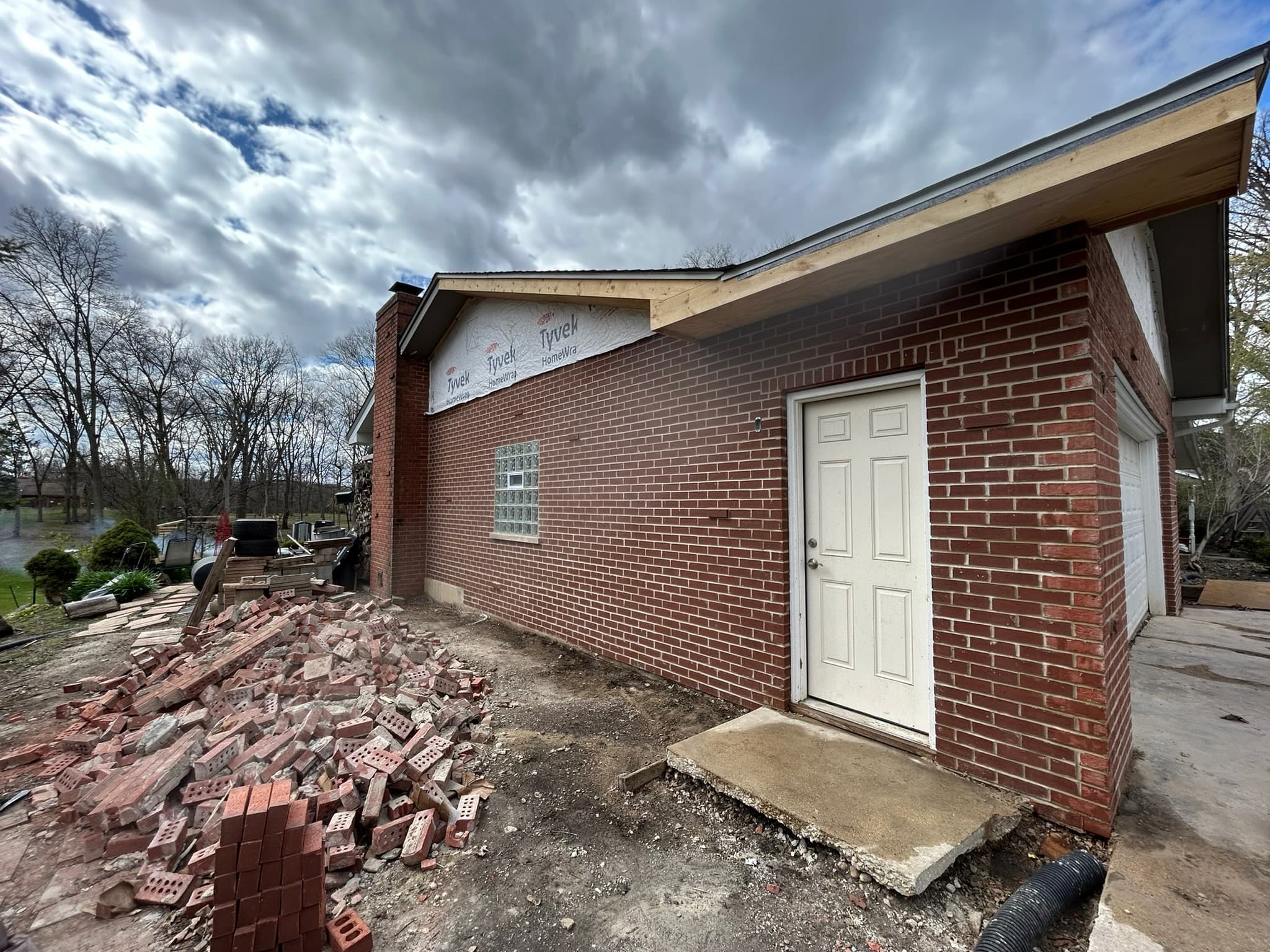
CMU Block Buildings and How They Deteriorate
Concrete masonry units — CMU, or simply "block" — are the workhorses of commercial and industrial construction. Cheaper than brick, faster to lay, and structurally solid, CMU became the standard material for warehouses, light industrial buildings, retail shells, and institutional construction throughout the I-55 corridor from the 1960s onward. Crest Hill, positioned along that corridor just north of Joliet, has a significant inventory of this building type.
CMU walls deteriorate differently from brick walls in a few important ways:
Joint deterioration is the primary issue — mortar joints in CMU walls erode from freeze-thaw cycling, but because CMU joints are often wider and less consistently tooled than brick joints, deterioration can proceed faster. A CMU wall with recessed, crumbling joints admits water aggressively.
Block face damage — individual block faces crack or spall from impact (loading dock areas are particularly vulnerable), from freeze-thaw penetration in chronically wet joints, and from corrosion of internal steel reinforcing in older load-bearing block construction.
Efflorescence is very common on CMU block. The calcium silicates in the block itself are highly soluble and migrate readily to the surface when water cycles through the wall. On flat-faced CMU, efflorescence deposits accumulate faster and more visibly than on fired brick.
Crack patterns — horizontal cracks in CMU walls typically indicate differential settlement or thermal stress. Stair-step cracks indicate foundation movement. Vertical cracks at corners or at regular intervals often indicate thermal expansion joint failure or omission. Each pattern has a different cause and requires a different approach.
Crest Hill's Commercial and Industrial Inventory
The I-55 and Route 30 corridor through Crest Hill includes a range of commercial and light industrial properties — tilt-up concrete buildings mixed with CMU block construction, older warehouse stock from the 1970s and 1980s, and newer commercial development along Plainfield Road. The older CMU buildings in this area are 40 to 55 years old and have, in most cases, had no systematic masonry maintenance.
What we see most consistently on Crest Hill commercial and industrial properties:
- Grade-level joint deterioration — the lower three feet of exterior CMU walls, exposed to ice melt chemicals and persistent ground moisture, typically show the most severe joint erosion. In Illinois, ice melt is particularly hard on CMU because chloride salts migrate into the block pores and accelerate internal deterioration.
- Loading dock area damage — block faces adjacent to loading dock openings absorb impact regularly and often have cracked or knocked-through units that need replacement
- Parapet coping failure — CMU block buildings with flat roofs almost universally have parapet coping joint issues at the 25-35 year mark, and coping failure is the most common source of interior ceiling water damage
- Efflorescence patterns indicating specific infiltration points at failed joints or coping
Repair Services for CMU Block in Crest Hill
Joint Repointing
We cut CMU mortar joints to a minimum 3/4" depth using mechanical tools, clean the joint thoroughly, and pack with mortar appropriate for CMU construction. Modern CMU is denser than pre-1960 brick and typically accommodates Type S mortar without spalling risk. Joint profile on CMU is usually tooled flush or slightly weathered, matching the original.
Block Replacement
When individual blocks have cracked through the face or sustained impact damage beyond surface repair, we remove the affected unit and set a matching replacement. CMU blocks are more standardized than brick, making matching generally easier — the main consideration is color, aggregate texture, and nominal size.
Crack Repair
Hairline cracks in mortar joints are addressed by repointing. Full crack repair where the crack passes through block faces requires either block replacement or epoxy injection depending on structural context. We assess each crack pattern for cause before recommending a repair method — treating a settlement crack as a mortar issue produces a repair that fails.
Parapet and Coping
CMU parapet walls are repaired the same way as brick parapets: coping joints are cut and repointed, displaced coping units are reset, and the upper parapet face is tuckpointed. We use a slightly harder mortar specification at parapet level where the wall takes weather from three sides.
FAQ
Is CMU block repair more expensive than brick repair?
Generally comparable, but CMU repair can be faster on a per-area basis because the blocks are larger. The biggest cost variable is whether block replacement is needed (requires sourcing and careful setting) versus joint repointing only (faster). We provide unit-by-unit scope in written estimates so you can see exactly what's driving the cost.
Can efflorescence on CMU block be permanently eliminated?
Efflorescence requires the same treatment sequence as on brick: identify and repair water entry points first, clean the deposits after repairs are complete, then apply a penetrating sealer after the repair mortar has cured. Because CMU is more porous than dense fired brick, a quality silane-siloxane penetrating sealer makes a proportionally larger difference on block — the performance improvement is more significant than it would be on glazed brick.
My CMU building has horizontal cracks running at the same course height around the full perimeter. What causes that?
Horizontal cracking at a consistent bed joint elevation throughout a CMU building — especially if it's continuous around corners — often indicates thermal expansion stress acting across the building envelope rather than standard mortar joint deterioration. Buildings that lack properly placed expansion joints are particularly susceptible. This pattern warrants a structural assessment alongside masonry repair, because the crack will reform quickly if the underlying thermal movement is not accommodated.
Do you work on load-bearing CMU or only veneer?
Both. Load-bearing CMU repair requires more attention to temporary shoring and staged work to avoid overloading the wall during repair, and may require structural consultation for significant crack or damage patterns. We assess the wall type during the estimate and scope accordingly.
Service Area
Emerald Masonry LLC serves Crest Hill and the surrounding Will County corridor — including Joliet, Lockport, Plainfield, Romeoville, and Channahon. We're based in Palos Heights, roughly 25 miles northeast. Phone: (708) 288-1696 | emeraldmasonryil@gmail.com | Free on-site estimates.
For CMU block repair, commercial masonry, or full masonry restoration in Crest Hill and Will County, contact us to schedule your assessment.
Ready to get started?
Free on-site estimates for commercial and large-scale projects.