
Masonry Restoration · Lansing, IL
Masonry Restoration in Lansing, IL — Full-Scope Brick and Mortar Repair for South Cook County
Lansing's older brick housing and commercial stock — much of it built between 1945 and 1975 — has reached the point where surface maintenance isn't enough. Emerald Masonry LLC provides full-scope masonry restoration for residential, commercial, and institutional properties throughout south Cook County.
Quick Answer
Lansing's older brick housing and commercial stock — much of it built between 1945 and 1975 — has reached the point where surface maintenance isn't enough. Emerald Masonry LLC provides full-scope masonry restoration for residential, commercial, and institutional properties throughout south Cook County.
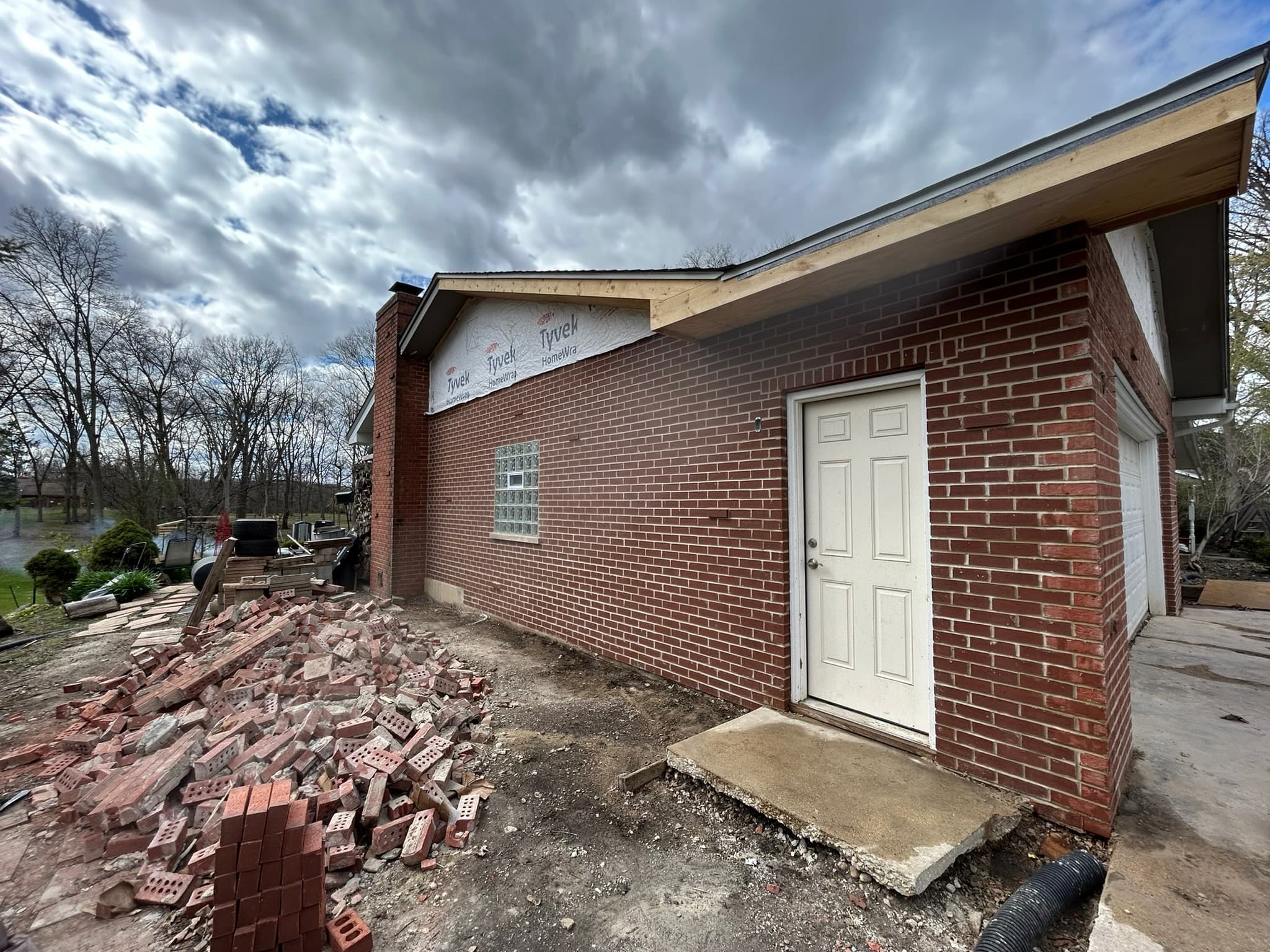
Masonry Restoration vs. Maintenance: A Distinction That Matters Here
Routine tuckpointing keeps sound masonry in good condition. Masonry restoration is the appropriate term when the work required goes beyond joint repair — when brick replacement, lintel work, parapet rebuilding, or a comprehensive multi-phase intervention is needed across the building envelope.
In Lansing, the latter describes a large portion of the commercial and residential building stock. Lansing sits at the southeastern corner of Cook County, roughly 20 miles from the Loop and adjacent to the Indiana border. Most of its residential buildings were constructed between 1945 and 1975 — solid postwar construction that is now 50 to 80 years old. The industrial and commercial buildings along Torrence Avenue and the commercial strips on Ridge Road include older brick structures that, in many cases, have had no professional masonry attention since they were built.
South Cook County isn't a target market for contractors who advertise primarily in the north suburbs. We're based in Palos Heights — roughly 12 miles northwest of Lansing — and we work throughout the south Cook County corridor regularly.
What Full Masonry Restoration Involves
"Masonry restoration" gets used loosely. Here is what a genuine full-scope project involves on a building that hasn't been maintained in decades:
Condition Assessment
We walk the building systematically — probing mortar joints with an awl, tapping brick faces to identify hollow delamination, assessing steel lintels above every opening, inspecting parapet caps and coping joints on commercial buildings, and documenting deterioration by elevation and severity level. Everything is photographed. For larger commercial properties, we generate a written condition report prioritizing work by urgency: immediate structural concerns, water infiltration risks, and surface maintenance.
Phase 1: Structural and Lintel Work
Steel lintels spanning door and window openings in 1950s–1970s construction are typically bare or minimally galvanized steel. At 50–70 years of age, many have progressed to active corrosion. We address these first — before any repointing — because lintel work disturbs the surrounding masonry that would otherwise have just been repointed. Catching active lintel corrosion before it reaches brick displacement saves significant scope and cost downstream.
Phase 2: Brick Replacement
Any spalled, fractured, or structurally failed brick comes out before repointing begins. This includes brick along the parapet top, adjacent to failed lintels, and in sections where moisture has cycled long enough to cause face delamination. We source replacement brick from reclaimed suppliers to match the original color, texture, and nominal size.
Phase 3: Full-Building Tuckpointing
Once structural work and brick replacement are complete, we cut and repoint all joints across the building using mortar matched to the original mix. On 1950s–1970s brick, this is typically a Type N or lime-Portland blend — not a hard modern Type S mortar that will crack the brick rather than the joint when the wall moves.
Phase 4: Parapet and Coping
The parapet takes weather from three sides simultaneously. Coping joint failures at the top of the wall are the most common source of interior ceiling water damage on flat-roof commercial buildings. We address coping joints, reset displaced coping units, and repoint the upper parapet face as a distinct phase because the access method differs from wall face work.
Phase 5: Penetrating Sealer
After all repairs have cured (28 days minimum), we apply a silane-siloxane penetrating sealer to the exterior face. This is optional but recommended for buildings with significant moisture infiltration history — it creates a hydrophobic barrier without trapping vapor in the wall assembly.
South Cook County Commercial Properties
The commercial buildings along Torrence Avenue, Ridge Road, and 170th Street in Lansing span retail strip centers, light industrial facilities, and mixed-use properties. Most of these buildings have been owned and managed without dedicated masonry maintenance budgets, and many are now at a stage where deferred maintenance has produced compounding damage.
For property managers and owners handling older commercial stock in Lansing and the surrounding south Cook County area, the practical question is usually: when does deferred tuckpointing become a full restoration? The answer is when spalled brick and lintel damage appear alongside mortar deterioration. That combination means a maintenance-only scope isn't adequate.
We work with commercial property managers throughout south Cook County to define scope accurately, provide phased pricing when full-scope budgets aren't available in a single year, and prioritize the elements with the highest structural or liability risk.
For insurance documentation on storm-damaged properties, see our commercial masonry service page for what that process looks like.
FAQ
What's the practical difference between tuckpointing and masonry restoration?
Tuckpointing is a maintenance process: remove deteriorated mortar, replace with matched mortar. It's appropriate when the brick is sound and joint repair is the only intervention needed. Masonry restoration is a broader scope — brick replacement, lintel work, parapet rebuilding, or a combination of structural and maintenance work across the full building envelope. On a building that hasn't been maintained in 30+ years, restoration is almost always the correct framing for the project.
How long does full masonry restoration take on a south Cook County commercial building?
For a typical one-story strip center with full tuckpointing, selective brick replacement, and lintel inspection, plan on 2–3 weeks for a crew of two to three. Buildings with significant parapet or lintel scope extend the timeline. We include a detailed work schedule in the written estimate so property managers can plan around it.
Is there a minimum project size?
Our minimum is $5,000. Full-scope restoration projects and most substantive repair scopes are well above that threshold. Single-item repairs — one lintel or a few replaced bricks — that come in under the minimum are generally better handled by a smaller contractor.
Do you work directly with building owners in Lansing, or primarily with property management companies?
Both. A significant portion of our south Cook County commercial work is directly with building owners who manage their own properties. We also work with property management companies, HOAs, churches, and institutional clients. The estimate and contracting process is identical regardless.
Service Area
Emerald Masonry LLC is based in Palos Heights, roughly 12 miles northwest of Lansing. We serve the south Cook County corridor — including South Holland, Dolton, Calumet City, Harvey, and Markham — as well as the broader Chicagoland area.
For masonry restoration, tuckpointing, or a full commercial masonry assessment, call (708) 288-1696 or email emeraldmasonryil@gmail.com. Free on-site estimates — we respond within one business day.
Ready to get started?
Free on-site estimates for commercial and large-scale projects.