
Tuckpointing & Repointing · Midlothian, IL
Tuckpointing in Midlothian, IL — Mortar Joint Repair for South Cook County Brick Buildings
Midlothian's postwar brick housing stock — bungalows and ranch homes built between 1945 and 1970 — has reached the age where mortar joints consistently need attention. Emerald Masonry LLC provides expert tuckpointing for residential and commercial properties throughout south Cook County.
Quick Answer
Midlothian's postwar brick housing stock — bungalows and ranch homes built between 1945 and 1970 — has reached the age where mortar joints consistently need attention. Emerald Masonry LLC provides expert tuckpointing for residential and commercial properties throughout south Cook County.
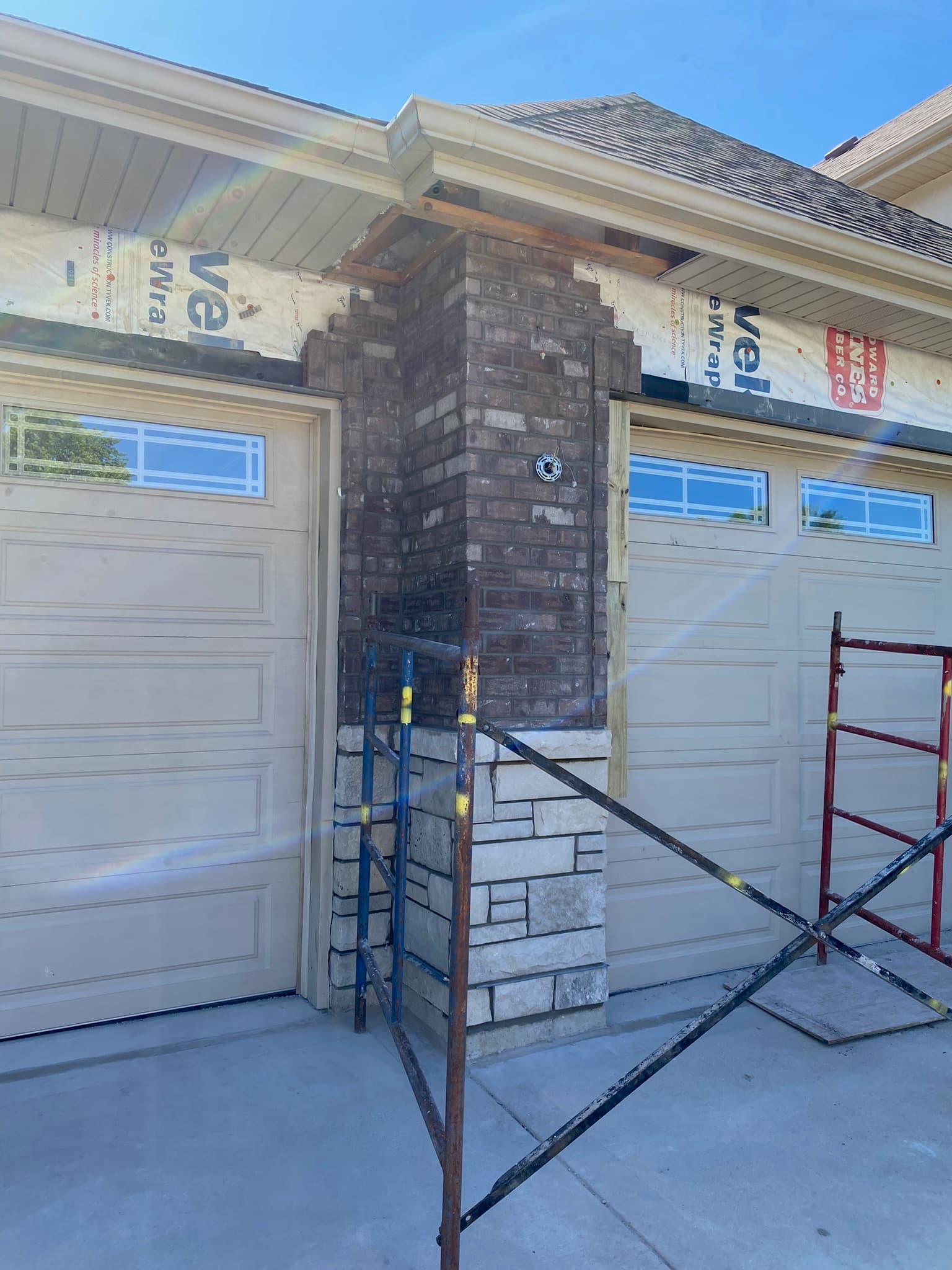
Midlothian's Brick Housing Stock: Where Things Stand Today
Midlothian is a compact, primarily residential suburb — roughly 14,000 residents, predominantly single-family and two-family homes on tight lots along the south Cook County grid. Most of the housing was built between 1948 and 1970, the same postwar construction window that produced the bungalows and ranch homes throughout the south suburbs. That puts the brick on most Midlothian homes between 55 and 75 years old.
At that age, the original lime-Portland mortar mix that held those joints for the first 40 years has either been worn down by freeze-thaw cycling, replaced with a previous tuckpointing job that may or may not have been done correctly, or — in the homes that were well maintained — is still holding but approaching the end of its service life.
What accelerates deterioration in Midlothian specifically is the combination of postwar brick that wasn't fully vitrified (softer, more porous than modern brick) and decades of Illinois freeze-thaw events. The south Cook County area doesn't have the urban heat island that keeps inner Chicago neighborhoods from the worst cold, and the relatively flat, open landscape means wind exposure to driving rain is substantial.
The Cost of Tuckpointing Now vs. Deferring It
The straightforward question most Midlothian property owners face: is the cost worth it now, or can it wait?
A standard bungalow or ranch home with 1,500–2,000 square feet of brick exterior typically runs $3,500–$6,500 for full tuckpointing, depending on how far the joint deterioration has progressed and whether any brick replacement is needed. That's the maintenance window — once the mortar has eroded past 3/8" recession but before secondary damage has accumulated.
If tuckpointing is deferred past that window:
- Water enters the wall cavity and saturates insulation and backing material — a much harder problem to fix
- Repeated freeze cycling spalls brick faces in the most exposed courses (upper wall, north elevation), adding brick replacement to the scope
- Steel lintels above windows and doors begin to rust when water reaches them — replacement runs $800–$1,800 per opening
- Grade-level mortar deteriorates into the foundation zone, which often requires access staging to repair correctly
A home that needed $4,500 in tuckpointing five years ago may now be looking at $10,000–$15,000 in combined tuckpointing, brick replacement, and one or two lintel replacements. The math on deferral is unfavorable in almost every case.
How We Approach Tuckpointing in Midlothian
Our process on residential tuckpointing in south Cook County:
Mechanical Joint Cutting
We use angle grinders with diamond blades and oscillating multi-tools to cut joints to a depth of 3/4"–1". This step is where the quality difference between a proper tuckpointing job and a surface patch begins. Contractors who apply mortar over old mortar without mechanical cutting produce patches that last 3–5 years. Mechanically cut and repacked joints last 20–30 years.
Mortar Selection
For postwar Midlothian residential brick — most of it a lime-brick composite from the 1940s–1960s — we use a Type N or lime-Portland blend rather than the harder Type S mortar specified for modern construction. This matters because mortar hardness relative to the brick determines where cracks form when the wall moves. The mortar should be the sacrificial element, not the brick face.
Packing and Tooling
New mortar is packed in multiple passes for deep joints. Once the mortar is firm but not hard, each joint is tooled to the original profile — usually a slightly concave rodded joint on postwar residential brick. Tooling compacts the surface layer and significantly improves water resistance. Skipping this step produces joints that look done but perform worse.
For a typical Midlothian bungalow, the full project takes 2–3 days for a two-person crew.
Chimneys and What to Look For
Most Midlothian homes with brick chimneys are showing crown deterioration — these stacks are 55–75 years old, the concrete crowns have been cracking for decades, and many have had caulk applied as a patch rather than a new crown poured. If we're already on a Midlothian property for wall tuckpointing, we assess the chimney condition at no additional charge during the estimate.
Signs of chimney problems visible from the ground: white staining running down the stack (efflorescence from water cycling), brick faces that look chipped or layered, and mortar joints that appear recessed or dark with moisture absorption.
FAQ
Can I tell from looking at a neighbor's recent tuckpointing whether it was done right?
Often yes. Look at the joint transition between worked and unworked sections. If the new mortar sits flush with or on top of old mortar at the border — no visible step difference in depth — the contractor surface-patched without cutting the joints. Properly done tuckpointing shows a clean tooled joint profile and a visible depth difference at the edges of the worked area. A stark white joint on 60-year-old brick also often indicates a hard modern mortar was used, which can cause spalling in the next few freeze cycles.
Should I tuckpoint before or after power washing?
After tuckpointing, not before. Power washing drives water into compromised joints and can accelerate the very deterioration that tuckpointing is about to address. After tuckpointing is complete and mortar has cured (at least 2 weeks), a gentle rinse is fine.
My house was tuckpointed about 20 years ago. Should I be looking at it again?
Probably yes, particularly on north and rear elevations that don't get direct sun. A properly done job from 20 years ago is approaching its second maintenance window in Illinois. Get a probe assessment — if joints are still sound at 3/4" depth, you have a few more years. If they're noticeably recessed or crumbling, it's time.
Service Area
Emerald Masonry LLC serves Midlothian and surrounding south Cook County — including Alsip, Oak Forest, Blue Island, Crestwood, and Calumet City. We're based in Palos Heights, about 5 miles northwest. Phone: (708) 288-1696 | emeraldmasonryil@gmail.com | Free on-site estimates.
For tuckpointing, brick repair, or a full masonry assessment in Midlothian, call or email to schedule.
Ready to get started?
Free on-site estimates for commercial and large-scale projects.